 Photo: Sunset from the ramparts of Saint-Malo.
I have resolved to blog with renewed zeal to reward the interest of all my new readers. So we travel to north-western France, destination for Cardinal Wolsey's last holiday in late August, for the first in a series of vacation posts.
The overnight ferry from Her Majesty's Dockyard in Portsmouth to Saint-Malo is a good choice - you get to review the British fleet on the way out (at least the ships not yet sold to Chile) and arrive in the morning at the gateway to Brittany. Very civilised, even with the children intoning "are we there yet?" as we steamed past the Isle of Wight.
Most Brits will drive off the ramp and head west or south without looking at Saint-Malo, but this is a mistake, as this historic town has lots to offer. The impressive walled citadel was once home to pirates and privateers, although most of the buildings are reconstructions. Unfortunately Gen.Patton had a little trouble dislodging the Germans in 1944, and 80% of the original citadel was flattened.
What of the "Infernal Machine?". Until WW2, Saint-Malo was never captured, in spite of many attempts by the Brits to do so (we didn't like towns that hosted privateers and corsairs). In 1673, during William of Orange's conflict with Louis XIV, the Royal Navy tried using an old warship as a powerkeg and set it loose towards Saint-Malo.
There is a good description what happened next in this piece on Admiral Benbow, who was in command.
"The vessel took the form of a barque crammed with upwards of a hundred barrels of gunpowder, roofed over with a ceiling of planks and covered with thatch, faggots of wood, pitch, tar, resin; in short, anything that burned. On top of all that came the missiles. Canon-balls of iron and stone, bombs, iron chains and shells were wrapped in tarpaulin".
The ploy failed when the wind changed, and it blew up against some rocks with an almighty bang. The citadel was rocked and damaged, but the English did not attempt to take it (lack of enough marines).
More English bombardments in 1695 also failed to defeat the defences, which were later strengthened further by the great military architect Vauban.
Anyway, here's an earlier unsuccesful attempt to take a French castle!
15 September, 2008
Saint-Malo and the Infernal Machine


07 June, 2007
Eighty Years in London
Saw this in today's Evening Standard. Simon Rigglesworth and like-minded photographers are trying to update the 1200 pictures in a book entitled Wonderful London, published in 1926.
You can see them here on the flickr picture-sharing site, including various tudor buildings such as the brick gatehouse in St James.
17 June, 2006
16th June, 1904. Bloomsday

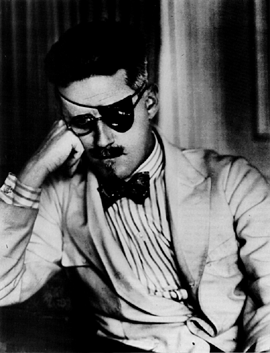
This is the day that Leopold Bloom, a central character in James Joyce's "difficult" (ie weird) novel Ulysses, begins his walk around Dublin. Ulysses is based loosely on Homer's The Odyssey, and divides opinion as to whether it is a) work of genius or b)pretentious tosh ("Man goes for a walk around Dublin. Nothing happens").
There is a neat summary, with reader views for and against, on the BBC website
29 May, 2006
29th May, 1919. Invention of the Pop-Up Toaster

Charles Strite invented the pop-up toaster. -
This is from www.toaster.org (it's not the only toaster website...!)
"During World War I, a master mechanic in a plant in Stillwater, Minnesota decided to do something about the burnt toast served in the company cafeteria. To circumvent the need for continual human attention, Charles Strite incorporated springs and a variable timer, and filed the patent for his pop-up toaster on May 29, 1919. Receiving financial backing from friends, Strite oversaw production of the first one hundred hand-assembled toasters, which were shipped to the Childs restaurant chain. The first pop-up toaster for the home, the Toastmaster, arrived on the scene in 1926. It had a timing adjustment for the desired degree of darkness, and when the toast reached the preselected state, it was ejected, rather forcefully. The device stirred so much public interest that March 1927 was designed National Toaster Month, and the advertisement running in the March 5 issue of the Saturday Evening Post promised: "This amazing new invention makes perfect toast every time! Without turning! Without burning!" "
Check out this monster industrial-sized version with a later model shown for scale, from www.toastercentral.com
23 May, 2006
23rd May, 1906. Elgar bored on a ship

Edward Elgar was returning, by ship from Cincinnati .....from his diary entries it doesn't look like the voyage of the century -
21st "Began to be wet & cooler - dreadfully bored - No shovel board & no one to talk to -"
22nd"Voyage all much the same. Took refuge in reading Monte Cristo & Vingt ans après -"
23rd"Rain fog etc etc
"
24th"Fog all the time -"

