Showing posts with label 16th Century History. Show all posts

02 November, 2012

The All Saints Flood of 1570


 Drawing: Hans Moser, Scheldt Flood, 1570(wiki)
As we look at the images of the aftermath of Hurricane Sandy in the Northeast USA his week, here's a reminder of a devastating 16thC flood in Holland which took place this week in 1570.  This was the All Saints' Flood (Allerheiligenvloed) which may have killed 20,000 in Holland and neighbouring countries, leaving many more thousands homeless.
In fact there are a series of All Saints' (Aller Heiligen) floods along the North Sea coasts of Holland, Belgium, and Germany,  all taking place on or around 1st November, All Saints Day. Others took place in 1170, 1532, 1675 and most recently in 2006.

 The 1570 flood took place at a critical point in the history of the Netherlands. Tax reforms had led to increasing dissatisfaction with the rule of the Spanish king Philip II and his governor, and the flood only compounded the general feelings of unrest.

By 1581 the Dutch Republic had been formed and the foundations were being laid for the Dutch golden age of exploration and influence. Although Elizabeth I of the England sent troops under Robert Dudey to assist the Dutch against the Spanish, England and Holland would end up in conflict as Dutch naval power grew in the 17thC.


references:
www.bibliotheek.nl
www.wikipedia.com

28 January, 2010

Empire of the Seas with Dan Snow

"Empire of the Seas: How the Navy Forged the Modern World" is the title of Dan Snow's four-part documentary series currently setting sail on Friday evenings on BBC2, and jolly bracing it is too.

Dan is the son of Peter Snow, through-the-night BBC anchorman for many parliamentary elections, and I half expected Dan to roll out his dad's famous Swingometer to illustrate the shifts in the balance of sea power between Spain, France and Blighty.

As a former Boat Race man himself, Dan loses no opportunity to climb rigging, stand Winslet-like at the prow and man the wheel of various expensive-looking craft that the BBC has managed to borrow.

He also helps the modern Royal Navy to show off several of its more modern vessels, including a simulated raid by a large state-of-the-art fisheries protection vessel on a tiny defenceless fishing boat which the RN boat could easily squash by accident. Maybe there were no Somali pirates around to teach a lesson to...

The series charts the progress of the Royal Navy from the defeat of the Armada to the First World War, and therein lies one of the criticisms that have been aimed at the BBC. Why ignore the contribution of Henry VIII (and earlier regimes) in establishing the early Navy? Daly History Blog argues a similar point.

Cardinal Wolsey suspects that with such high production values (lots of helicopter flypasts as Dan sways on the topmast) the budget would only stretch to four episodes, so the early days had to be cut. See this previous post on Henry VIII's dockyards if you are interested in this period.

Another criticism is the sometimes slapdash treatment of the background politics (as opposed to the naval stuff proper). James Russell points out that the Armada was not simply a revenge mission for Drake's attack on Cadiz (as claimed in episode 1), but in fact it's key objective was to reverse the Protestant reformation and restore the Catholic church.

But Empire of the Seas is very good on how the expansion of the Navy was masterminded by men such as Sam Pepys . I agree with Molly Joyful's blog that the series isn't too gung-ho and highlights some of the less savoury episodes on the seas. These include the sad story of Admiral John Byng, also the subject of a previous post in this blog.

There is also a lavishly illustrated book to go with the series, written by expert naval historian Brian Lavery. Amazon UK are currently offering it at half price which at £10 is incredible value. That leaves a tenner spare for a bottle of rum to go with it.

06 August, 2008

Remains of the 'Wooden O' found


Archaeologists in London have found what looks like part of Shakespeare's original playhouse, known simply as The Theatre", in Shoreditch. The playhouse opened in 1576 and The Bard acted here with the Chamberlain's Men.

The theatre is mentioned in the prologue to Henry V:

"Can this cock-pit hold the vast fields of France? Or may we cram within this wooden O the very casques That did affright the air at Agincourt?"

The timbers were later moved to the South Bank and used to build The Globe in 1599.

A new theatre is to be built on the site at Shoreditch.

More on the history of The Theatre here.

07 April, 2008

Holiday Notes Easter 2008


Cardinal Wolsey was on holiday in France last week, and was pleased to pass a sign on the autoroute pointing out the Champ du Drap d'Or (Field of the Cloth of Gold), near to Calais.

This was the extravagant meeting in 1520 between Henry VIII and Francis I, suggested by myself. Each monarch tried to outdo the other in pomp and display of riches.

It was rather expensive for taxpayers on both sides, and failed to result in an Anglo-French alliance, which was the original idea.

In the relevant episode in TV's The Tudors, Henry wrestles Francis in a manly way, loses, and throws some chairs around. Grr!

27 February, 2008

Henry VIII's Dockyards


Portcities is a useful site if you are interested in the role of ports in British history. It is a partnership of port heritage websites, providing a web gateway to their collections, and will grow as more museums, libraries and archives join up.

It currently has material on London, Bristol, Hartlepool, Liverpool and Southampton.

In the London section is an interesting section on Henry VIII's royal dockyards at Deptford and Woolwich . These docks and shipyards played an important role in the early development of the Royal Navy, and Elizabeth I further developed the facilities at Woolwich.

Later on, the reputation of the shipyards encouraged a visit in 1698 by Peter the Great of Russia. Apparently his drunken parties messed up the home of diarist John Evelyn, whose house he was staying at.

Both yards went into decline after the Napoleonic Wars ended in 1815, as new facilities were built closer to Europe (e.g. at Chatham), more suited to building larger ships. Both Deptford and Woolwich closed in 1869, having played a key role in the Royal Navy's formative years.

24 January, 2008

Cardinal Wolsey and the Tudor Navy


You may have spotted via my Shelfari widget that I have been reading David Childs' excellent ship biography The Warship Mary Rose. The Mary Rose was Henry VIII's flagship until she sank in home waters in 1545, having taken part in three wars against France and one against Scotland.

The Mary Rose was famously salvaged in 1982 and her remains are now displayed at Portsmouth Historic Dockyard. A major project is under way by the Mary Rose Trust to build a fab new permanent exhibition to display the hull and exhibits, inevitably dependent on a large injection of dosh from Lottery funding. The decision on this is due TOMORROW Jan 25th, so fingers crossed!

Amongst the primary sources quoted by Childs are letters between Cardinal Wolsey and captains of the Mary Rose concerning the ships provisions (or lack of) and other matters. As the King's Master Almoner, Wolsey "...was able to demonstrate that the idea of a standing navy was a sustainable one." (Childs, ibid, p.89).

Childs also quotes Wolsey's biographer Francis Hacket:
"[Wolsey] personally signed contracts for everything from twenty-five thousand fat oxen for salting to the hire of fourteen mares to haul a culverin (cannon)" (ibid, p.90).

One of the problems that Wolsey seems to have encountered is that empty barrels were not returned by the navy to shore for re-filling with provisions - many were simply thrown overboard. Hence this extract from a letter to (Admiral) Thomas Howard in 1513:
"My lord, I assure you it is not possible to furnish your revictualling if Foists (barrels) be not

more plenteously brought from the navy to Hampton than they be....for ye cannot be provided elsewhere of any foists for money" (ibid, p.96).

Wolsey's rather statistical reaction to the loss of the warship Regent, blown up off Brittany in 1513 along with the French ship Cordeliere, is revealed in this extract from a letter to the Bishop of Worcester:
"And after innumerable shootings of guns and long chasing one another, at the last the Regent most valiantly boarded the [Cordeliere], wherein were 4 lords, 300 gentlemen, 800 soldiers and mariners, 400 crossbowmen, 100 gunners, 200 tunnes of wine, 100 pipes of beef, 60 barrles of gunpowder and 15 great brass cortains with so marvelous number of shot and guns of every sort" (ibid, p108).

After this bloody action in which up to 2000 men on both sides were killed, Henry decided to construct the Woolwich Dockyard to build more ships.


10 December, 2007

"The Tudors" fun quiz


Here's a fun quiz which the people behind "The Tudors" have put out as part of a DVD promo. The executioner raises his axe higher with every wrong answer......you can guess the rest.

17 November, 2007

Vivat Regina! The Elizabethan era begins, 17th November, 1558.


November 17th 1558 was the date that Elizabeth I, daughter of Anne Boleyn, acceded to the English throne, aged 25, after the death of her half-sister Mary I.

In a recent poll by Lara at the TudorHistory blog, Elizabeth easily won the category "favourite Tudor monarch", receiving twice as many votes as Henry VIII in second place.

On her descent from Henry VIII, Elizabeth said: "Although I may not be a lioness, I am a lion's cub, and inherit many of his qualities" [source: Thinkexist.com]

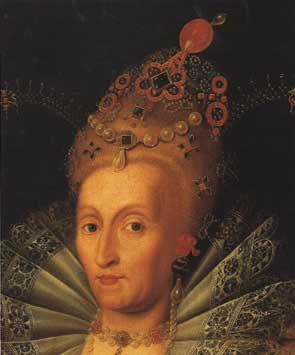
The portrait shows Elizabeth aged around 13.

13 November, 2007

Bloody Events


This week is the anniversary of several Early Modern events that have something in common...blood

November 13th 1553 saw the trial for high treason of Lady Jane Grey and Lord Dudley, although they were not executed until February the next year. Poor Jane's sentence called for her to "be burned alive on Tower Hill or beheaded as the Queen pleases"'[source:Wiki]. Queen "Bloody" Mary chose beheading, which was nice of her.

November 13th is also the anniversay of the Battle of Turnham Green, 1642, an early stand-off in the English Civil War, in which the Royalists, having sacked the posh new waterside flats around Brentford, attempted to seize control of one of London's most important bus garages, but were rebuffed. The English Civil Wars site tells the story.

Samuel Pepys' diary entry for 14th November 1666 gives an account of an early experiment in blood transfusion. [Press the "Back" button now if you are fond of little doggies]. Eric at the Project History blog relates the grisly facts.

03 November, 2007

Cardinal Wolsey Arrested! 4th November, 1530.

What were the events leading up to the arrest and death of Wolsey?

During the autumn of 1529, Henry VIII, angry that Cardinal Wolsey had failed to secure an annulment to his marriage to Catherine of Aragon, had stripped Wolsey of his office of Chancellor, along with most of his property.

In February 1530 Wolsey was pardoned by Henry and allowed to retire as Archbishop of York. He set off for Yorkshire and set about winning support from the folk living around Cawood Castle (see picture), the residence of the Archbishop.

Wolsey's long-term survival seemed at this point reasonably secure if he played his cards cautiously.

However, Wolsey made two mistakes. He plotted to have Anne Boleyn (one of his key opponents at court) forced into exile and wrote letters to Queen Catherine and the Pope to that end, which the King found out about (Bad). Wolsey also apparently failed to invite Henry to his lavish planned enthronement as Archbishop of York (Bad also).

Having lost patience, Henry ordered Henry Percy, Earl of Northumberland to arrest Wolsey at Cawood.

The scene of the arrest is described by George Cavendish, Wolsey's gentleman-usher and biographer:

"The Cardinal was at dinner when Northumberland arrived; the bustle occasioned by his admittance reached Wolsey's ears, who came out of the dining room on to the grand staircase to inquire the cause. He was there met by the Earl, who drew him aside to a window, and showed his commission, exclaiming, 'My Lord Cardinal, I arrest you in the name of King Henry.' The Cardinal assumed a lofty air and tone, appealing to the Court of Rome, whose servant he declared himself to be, and consequently not amenable to temporal arrest. In reply, said the Earl, 'My Lord, when you presented me with this staff (showing his staff of office), you then said that with it I might arrest any person beneath the dignity of a sovereign.' Wolsey's countenance immediately fell, while he soberly subjoined, 'My Lord, I submit, and surrender myself your prisoner.' "
source: York Online website.

Another account is given by Tudor chronicler Edward Hall.

After the arrest Wolsey was taken to Sheffield Castle, and died on the 24th November 1530 at Leicester, whilst being conveyed to London to face likely execution.

Incidentally, Wolsey was not buried in the monumental black sarcophagus he had designed for himself; that box was eventually occupied by...Lord Nelson. Wolsey was simply laid to rest within the walls of Leicester Abbey.

29 July, 2007

Cardinal Wolsey - Key Dates or Timeline


Key Dates in Cardinal Wolsey's life: this post will be updated as more events are added, so this is a "starter for 10". (Readers outside the UK may not be familiar with this phrase..it comes from the TV quiz show University Challenge, where each round starts with a question worth ten points!)

Wolsey's age at the time is given in brackets, assuming he was born in Jan 1472 (we are not sure).

1471, 1472 or 1473.Wolsey born in Ipswich, Suffolk. Son of probable butcher and/or grazier and/or merchant Robert Wulcy.
1487 or 88 (15 or 16). Took first degree at Magdelen College, Oxford at young age.
1491 (19) Took Masters degree at Oxford.
1496 (24) Father, Robert Wulcy, dies.
1497 (25) Elected Fellow of Magdalen; appointed Master of adjoining school.
1498 March 10th. (age 26). Ordained a priest in Marlborough
1500 (28) Presented with Rectory of Limington, Somerset, but may never have taken up residence (still schoolmaster in Oxford).
1506 (34) Acquires living of Redgrave in Suffolk.
1507 (35) Appointed chaplain to Henry VII.
1509, Feb.(37) Appointed Dean of Lincoln

1509. Death of Henry VII. Henry VIII becomes king.
1509. Henry VIII appoints Wolsey as Almoner, with a seat on the council.
1511 (39) Pope Julius II asks Wolsey for help against perceived French threat. Wolsey persuades Henry VIII to join Holy League against France
1511 (39) Wolsey becomes Canon of Windsor and member of Privy Council
1512 (40) Appointed Dean of Hereford.
1512-14 (40-42) War with France (expensive).
1513 (41) Henry dispatches army to Scotland to suppress rebellion. Scots defeated at Battle of Flodden with 10,000 dead, including James IV of Scotland.
1514 (42) Temporary peace with France brokered by Wolsey. Henry's sister Mary marries Louis XII as part of the deal.
1514 (42) Wolsey made Bishop of Lincoln, then Archbishop of York.
1514 (42) Wolsey angers Henry VIII by siding with the clergy in the case of Richard Hume.

1515(43) Pope Leo X appoints Wolsey as a Cardinal.
1515. Lord Chancellor Warham resigns after pressure from Wolsey. Henry VIII appoints Wolsey in his place.
1517-18 (45-46) Wolsey conducts enquiries into the Enclosures, which were driving the poor off the land and into the towns.
1518. Wolsey introduces "Just Price" policy to regulate meat prices.
1518. Wolsey made Papal Legate in England.
1518. Wolsey organises peace summit in London attended by 20 nations. Treaty of London signed as non-aggression pact and alliance against Turkish expansion.

1520 (48) Wolsey organises Field of the Cloth of Gold, an ego boost for Henry.
1520 (48) Wolsey makes alliance with Charles V of Holy Roman Empire against France, against treaty signed with France same year.
1522 (50) Wolsey raises £200,000 from the nobility via compulsory "benevolences".
1522-3 (50-51) War with France again (less successful).
1523. Wolsey drops opposition to Enclosures to gain Parliamentary support for war taxes. However, Parliament, led by Speaker Thomas More, offers only £100,000 per year against Wolsey's request for £800,000.
1523. Wolsey rewarded with Prince-Bishopric or Durham after succesful outcome of peace negotiations with France.

1524 (52) Wolsey dissolves a number of monasteries.
1524. Wolsey employed Benedetto of Florence to build a sumptuous sarcophagus of black marble at Windsor. Wolsey fell from disgrace before it was completed. It was eventually to mark the grave of Lord Nelson at St Paul's Cathedral in 1805
1525 (53) Charles defeats France at Battle of Pavia. Henry VIII has opportunity to seize power in France, but Parliament refuses to raise taxes. Wolsey devises Amicable Grant but is rebuffed and there is no invasion. Wolsey's popularity at new low.
1526 (54) Wolsey switches alliance to France again; devises League of Cognac (with France and some Italian states, against Charles)

1527 (55) Wolsey dissolves more monasteries.
1527, May. Wolsey convenes secret eclesiastical court to consider grounds for annulment of Henry's marriage to Katherine of Aragon, which Wolsey initially opposed.
1527. After bad harvest, Wolsey avoids disorder by distributing surplus grain to the needy.
1528 (56). Wolsey begins to limit benefit of the clergy.
1528. Henry is said to have exclaimed that he would have given "a thousand Wolsey's for one Anne Boleyn".
c1528. Son, Thomas Wynter Wolsey, born to Wolsey and his mistress Joan Larke of Yarmouth.
1529 (57). France makes peace with Charles, and stirs up Scots against England.
1529, Oct. Wolsey stripped of office of Lord Chancellor. Wolsey gives the King most of his property, and retires to Esher. Wolsey falls ill.
1530, Feb. Henry pardons Wolsey and confirms his Archbishopric of York, much to Anne's displeasure.
c1530 (58) Wolsey's daughter, Dorothy, born.
1530. Wolsey visits Sheffield
1530, Nov. Anne Boleyn's campaign against Wolsey is successful and he is charged with treason whilst in the north.
1530. Nov 28/29 Wolsey dies at Leicester on his way to probable execution in London. Wolsey was laid to rest within the walls of Leicester Abbey.


sources: Wikipedia, Catholic Encyclopedia, Luminarium

13 July, 2007

The Dean of St.Paul's invents bottled beer, 13th July, 1568


Cardinal Wolsey did not drink bottled beer. Why? Because he had been dead for 39 years when Dr Alexander Nowell, Dean of St Paul's is reputed to have discovered the benefits of bottled beer by accident.

According the the History of the Pint,
the Dean had decanted some beer into a bottle for a fishing expedition in 1568. He lost a bottle in the grass and, "when he came upon it again quite by chance a few days later, found it was still perfectly drinkable".

The Mary Rose website discusses the importance of copious supplies of beer to the Tudor navy : seven gallons per man was the norm.

Some interesting"annotations" on the subject of beer in the 17th century have been contributed by readers of the Samuel Pepys Diary blog . Pepys himself records the unfortunate consequences of drinking bad beer in the diary...
"Drinking of cold small beer here I fell ill, and was forced to go out and vomit, and so was well again and went home by and by to bed."(16 March, 1662).

["Small beer" was lower in alcohol than "Strong beer", and so more liable to contamination! ]

18 June, 2007

First life insurance taken out in London, 18th June, 1583

Although we know that Roman "burial clubs" were a form of life insurance, Alderman Richard Martin is generally credited with taking out the first Life Insurance policy proper. The policy was taken out on the life of William Gybbon, a salter (he preserved meat and fish).

Apparently the policy was a one-year term, and Gybbon died just before the year was up. True to present form, the underwriters initially refused to pay up on the grounds that the contract was for a lunar year. The courts however ruled in favour of Martin.

There is more information in the Annals of the American Academy of Political Science, 1905 : apparently Martin effectively wagered 30 pounds with 13 London merchants that Gybbon would die within the year, and on his death received 400 pounds - a large amount. Cause of death not recorded.........

11 June, 2007

London Olympics logo, 1512 style


With all the comment around the London Olympics 2012 logo, here's an idea for a simple Tudor-style logo for the 1512 Games - shown here on an attractive linen placemat.

Typeface acknowledgment:
Boert Tudor from www.sulucas.com

03 June, 2007

Henry VIII marries Katherine of Aragon, 3rd June, 1509


Henry VIII married his first wife Katherine of Aragon (pictured left) on 3rd June, 1509.

Katherine quick facts:

She had previously married Henry's brother Arthur Tudor (pictured right): the marriage was part of a deal between Henry and Spain, and was 16 years in negotiation.

Arthur died after 6 months of marriage, in Ludlow Castle.

When Henry and Katherine were engaged, Katherine was 17, Henry was 12.

They were married for over 20 years.

Of Katherine's children, only Mary survived.

This list of Katherine's births is a reminder of how things were during Tudor times......
1510 Unnamed Daughter - died of natural causes
1511 Henry Tudor - Son - died aged 53 days of natural causes
1513 Unnamed Son - died on day of birth of natural causes
1514 Unnamed Son - died on day of birth of natural causes
1516 Mary - survived
1518 Unnamed Daughter - died of natural causes

Englishhistory.net has a link to Katherine's last letter to Henry, written in 1536. He had married Anne Boleyn in 1533.

29 May, 2007

Henry VIII marries Jane Seymour, 30th May 1536


Henry married Jane only 11 days after Anne Boleyn had lost her head. This was six years after the death of Wolsey.


On the left, the other Jane Seymour, born
Joyce Penelope Wilhelmina Frankenberg, in her 007 role as the lovely Solitaire.


In a googlefight, the Queen wins!

"Jane Seymour Queen of England": 517,000 results
"Jane Seymour actress" : 361,000 results

20 February, 2007

John Wilkes thrown out of the Commons for lewd "Essay on Women", 21st February 1764


John Wilkes (unflattering etching by Hogarth on right) was thrown out of the Commons in February 1764 for his lewd "Essay on Women"; today in history 2/21.

John Wilkes was an important radical politician in 18th century England, whose ugly features did not prevent him successfully chasing women whilst at the same time championing the cause of Liberty, to the annoyance of George III and his government.

Here's an extract from an entertaining book review by Geoffrey Robertson in the Times Online from March 2006:

Lord Sandwich (famous for declining to rise from his gaming table for lunch, ordering instead “two slices of bread with something in between”) read the poem to the House, declaring that:
“. . . life can little more supply Than just a few good f***s and then we die.”
[sorry , had to censor this! - CW]
This was a golden moment in the history of British hypocrisy. Sandwich faltered, but their lordships shouted “Go on, go on” before condemning Wilkes for publishing an obscene and blasphemous libel. Wilkes had the last laugh — to Sandwich’s suggestion that he would die either by hanging or the pox, he famously quipped: “That depends on whether I embrace your lordship’s principles or your mistress.”

Wilkes was regarded as a hero of Liberty in the United States, and John Wilkes Booth , assassin of Abraham Lincoln, was indeed named after him.
More on John Wilkes from Wikipedia .

07 October, 2006

A Man For All Seasons - Can Sir Thomas More outwit Master Cromwell?


Today's Saturday Play on BBC Radio 4 was an abridged version of A Man for All Seasons, with an a-list cast. If you missed the broadcast like me, for the next 7 days you can "listen again" on the Radio 4 Saturday Play web page. Enjoy!

Here is the BBC synopsis and cast list..
A Man For All Seasons. By Robert Bolt

"Sir Thomas More has managed to resist Henry VIII's pressure on him to sanction the forthcoming wedding to Anne Boleyn. All of Cromwell's plots to entrap Thomas fail as the wily Chancellor counters with his knowledge of the law and his right to silence. But can treachery from an unsuspected source spell doom for the brilliant statesman? "

Sir Thomas More ...... Charles Dance
Master Richard Rich ...... Julian Rhind Tutt
Master Thomas Cromwell ...... Ken Cranham
Cardinal Wolsey ...... Timothy Bateson
King Henry VIII ...... Brian Cox
Duke of Norfolk ...... Nicholas le Prevost
Master Will Roper ...... Martin Freeman
Lady Alice More ...... Kika Markham
Mistress Margaret (Meg) More ...... Romola Garai
Boatman/Steward (aka Matthew)/Jailer ...... Sam Dale
Archbishop Thomas Cranmer/Headsman ...... Peter Tate
Woman ...... Adjoa Andoh
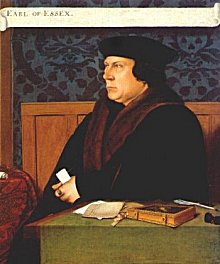
portraits: Sir Thomas More (above left), Master Thomas Cromwell (above right).
related previous posts:

04 October, 2006

Cardinal Wolsey Quotes including his Death

If you are searching for quotes by or about Cardinal Wolsey, including his Death, these are perhaps the two best-known quotes from the man himself....

"Father Abbot, I am come to lay my bones amongst you"
George Cavendish, Negotiations of Thomas Wolsey (1641), referring to Wolsey's arrival, already ill, at Leicester Abbey, Nov 26th, 1530, on his way to probable execution at the Tower. He died at Leicester on November 28th or 29th, aged around 55.

"Had I but served God as diligently as I have served the king, he would not have given me over in my gray hairs."
ibid.

Click this link for Cardinal Wolsey quotes in Shakespeare's Henry VIII


19 September, 2006

Tudor perfumery - how to smell nice without taking a bath


This post is prompted by a surprise link to this blog from the Perfume of Life discussion forum Baths were infrequent in Cardinal Wolsey's time, so how did tudor gentlefolk stay sweet?.

This from Proctor and Gamble's site: "At the royal court in Tudor days 'sweet breath' was prized as much as facial beauty, and perfumes were highly valued in a society where few people paid much attention to washing"

The International Federation of Aromatherapists has a comprehensive piece on the perfumes of Elizabeth I , from which the following extract gives a flavour......

"Houses and Royal Residences used masses of pleasant smelling herbs and flowers as 'strewing herbes' which would be scattered on the floor to produce a pleasant perfume to the air. England produced many aromatic plants in both gardens, fields and hedgerows. In the days when sanitation was virtually unknown, they also assisted in keeping hygienic standards. As every visitor to the the Tower of London will know, the Royal Appartments contained small grilles in the wall for 'bodily functions'.

Every castle or country house had its still room where perfumes and aromatics were made. These were vital places in the country as they produced herbals wines, mead and many other drinks. Housewives prided themselves on producing a whole range of 'household recipes' which included candied flowers, anti-moth powders and herbal bath additives of mint and lovage. Herb gardens proliferated and many can be seen today with their intricate herb knot gardens"

Here is a recipe from the same source:

FAIR GYRDLE OF POMANDERS - THE PERFUME NECKLACE FOR LADIES.
Take 1 ounce of Benjamin ( Benzoin), 1 ounce of Storax and 1 ounce of Labdanum.Heat in a mortar till very hot, and beat all the gums to a perfect paste. In beating add 6 grains of Musk and 4 grains of Civet. When it is beaten to a fine paste, wash your hands with Rose Water and take a portion and roll between the hands till it is round. Make holes in the beads and string them while they are hot.

....certainly beats Blue Stratos.