 Today we have a mystery photo: can anyone identify the location? It has a famous Tudor connection...
[Photo Copyright the author]
Showing posts with label Tudor History. Show all posts
Showing posts with label Tudor History. Show all posts
22 September, 2009
Mystery Photo Challenge


17 September, 2007
Anglesey and the Tudors - Holiday notes pt 2

What is the link between Anglesey and Tudor England? Owain Tudor, a decendent of 12thC Welsh prince Rhys ap Gruffydd, was born around 1400 on Anglesey at Plas Penmynydd. Wikipedia has the detail on Owain's ancestry but I got lost. His rather nifty coat of arms is shown at right.
Owain joined Henry V's court and, after Henry's death, became master of his widow Queen Catherine's wardrobe, and just possibly her bed, and they secretly married around 1428. This gave their grandson, Henry, a claim to the throne.
In 1485 Henry and his army defeated King Richard "My kingdom for a horse!" the Third at the battle of Bosworth Field in Leicestershire. Richard was killed and Henry was crowned Henry VII, starting the Tudor era.
Owain himself was executed in 1461 during the Wars of the Roses; his alleged last words to the executioner: "the head which used to lie in Queen Katherine's lap, would now lie in the executioner's basket." In fact, at 61 he had a good innings by medieval standards.
Recommended: Warren Kovach's Anglesey History site
29 July, 2007
Cardinal Wolsey - Key Dates or Timeline

Key Dates in Cardinal Wolsey's life: this post will be updated as more events are added, so this is a "starter for 10". (Readers outside the UK may not be familiar with this phrase..it comes from the TV quiz show University Challenge, where each round starts with a question worth ten points!)
Wolsey's age at the time is given in brackets, assuming he was born in Jan 1472 (we are not sure).
1471, 1472 or 1473.Wolsey born in Ipswich, Suffolk. Son of probable butcher and/or grazier and/or merchant Robert Wulcy.
1487 or 88 (15 or 16). Took first degree at Magdelen College, Oxford at young age.
1491 (19) Took Masters degree at Oxford.
1496 (24) Father, Robert Wulcy, dies.
1497 (25) Elected Fellow of Magdalen; appointed Master of adjoining school.
1498 March 10th. (age 26). Ordained a priest in Marlborough
1500 (28) Presented with Rectory of Limington, Somerset, but may never have taken up residence (still schoolmaster in Oxford).
1506 (34) Acquires living of Redgrave in Suffolk.
1507 (35) Appointed chaplain to Henry VII.
1509, Feb.(37) Appointed Dean of Lincoln
1509. Death of Henry VII. Henry VIII becomes king.
1509. Henry VIII appoints Wolsey as Almoner, with a seat on the council.
1511 (39) Pope Julius II asks Wolsey for help against perceived French threat. Wolsey persuades Henry VIII to join Holy League against France
1511 (39) Wolsey becomes Canon of Windsor and member of Privy Council
1512 (40) Appointed Dean of Hereford.
1512-14 (40-42) War with France (expensive).
1513 (41) Henry dispatches army to Scotland to suppress rebellion. Scots defeated at Battle of Flodden with 10,000 dead, including James IV of Scotland.
1514 (42) Temporary peace with France brokered by Wolsey. Henry's sister Mary marries Louis XII as part of the deal.
1514 (42) Wolsey made Bishop of Lincoln, then Archbishop of York.
1514 (42) Wolsey angers Henry VIII by siding with the clergy in the case of Richard Hume.
1515(43) Pope Leo X appoints Wolsey as a Cardinal.
1515. Lord Chancellor Warham resigns after pressure from Wolsey. Henry VIII appoints Wolsey in his place.
1517-18 (45-46) Wolsey conducts enquiries into the Enclosures, which were driving the poor off the land and into the towns.
1518. Wolsey introduces "Just Price" policy to regulate meat prices.
1518. Wolsey made Papal Legate in England.
1518. Wolsey organises peace summit in London attended by 20 nations. Treaty of London signed as non-aggression pact and alliance against Turkish expansion.
1520 (48) Wolsey organises Field of the Cloth of Gold, an ego boost for Henry.
1520 (48) Wolsey makes alliance with Charles V of Holy Roman Empire against France, against treaty signed with France same year.
1522 (50) Wolsey raises £200,000 from the nobility via compulsory "benevolences".
1522-3 (50-51) War with France again (less successful).
1523. Wolsey drops opposition to Enclosures to gain Parliamentary support for war taxes. However, Parliament, led by Speaker Thomas More, offers only £100,000 per year against Wolsey's request for £800,000.
1523. Wolsey rewarded with Prince-Bishopric or Durham after succesful outcome of peace negotiations with France.
1524 (52) Wolsey dissolves a number of monasteries.
1524. Wolsey employed Benedetto of Florence to build a sumptuous sarcophagus of black marble at Windsor. Wolsey fell from disgrace before it was completed. It was eventually to mark the grave of Lord Nelson at St Paul's Cathedral in 1805
1525 (53) Charles defeats France at Battle of Pavia. Henry VIII has opportunity to seize power in France, but Parliament refuses to raise taxes. Wolsey devises Amicable Grant but is rebuffed and there is no invasion. Wolsey's popularity at new low.
1526 (54) Wolsey switches alliance to France again; devises League of Cognac (with France and some Italian states, against Charles)
1527 (55) Wolsey dissolves more monasteries.
1527, May. Wolsey convenes secret eclesiastical court to consider grounds for annulment of Henry's marriage to Katherine of Aragon, which Wolsey initially opposed.
1527. After bad harvest, Wolsey avoids disorder by distributing surplus grain to the needy.
1528 (56). Wolsey begins to limit benefit of the clergy.
1528. Henry is said to have exclaimed that he would have given "a thousand Wolsey's for one Anne Boleyn".
c1528. Son, Thomas Wynter Wolsey, born to Wolsey and his mistress Joan Larke of Yarmouth.
1529 (57). France makes peace with Charles, and stirs up Scots against England.
1529, Oct. Wolsey stripped of office of Lord Chancellor. Wolsey gives the King most of his property, and retires to Esher. Wolsey falls ill.
1530, Feb. Henry pardons Wolsey and confirms his Archbishopric of York, much to Anne's displeasure.
c1530 (58) Wolsey's daughter, Dorothy, born.
1530. Wolsey visits Sheffield
1530, Nov. Anne Boleyn's campaign against Wolsey is successful and he is charged with treason whilst in the north.
1530. Nov 28/29 Wolsey dies at Leicester on his way to probable execution in London. Wolsey was laid to rest within the walls of Leicester Abbey.
sources: Wikipedia, Catholic Encyclopedia, Luminarium
13 July, 2007
The Dean of St.Paul's invents bottled beer, 13th July, 1568

Cardinal Wolsey did not drink bottled beer. Why? Because he had been dead for 39 years when Dr Alexander Nowell, Dean of St Paul's is reputed to have discovered the benefits of bottled beer by accident.
According the the History of the Pint,
the Dean had decanted some beer into a bottle for a fishing expedition in 1568. He lost a bottle in the grass and, "when he came upon it again quite by chance a few days later, found it was still perfectly drinkable".
The Mary Rose website discusses the importance of copious supplies of beer to the Tudor navy : seven gallons per man was the norm.
Some interesting"annotations" on the subject of beer in the 17th century have been contributed by readers of the Samuel Pepys Diary blog . Pepys himself records the unfortunate consequences of drinking bad beer in the diary...
"Drinking of cold small beer here I fell ill, and was forced to go out and vomit, and so was well again and went home by and by to bed."(16 March, 1662).
["Small beer" was lower in alcohol than "Strong beer", and so more liable to contamination! ]
28 June, 2007
Cornish rebels meet a sticky end , 27th June, 1497

Mychal an Gof ("the Smith") and Thomas Flamank were leaders of the Cornish uprising of June 1497. The uprising was a protest at taxes levied by Henry VII to pay for an invasion of Scotland, a war which the Cornish people did not feel connected with; they also suspected that much of the money raised would go to corrupt officials.
[Thomas Wolsey was 24 at the time, and was preparing for ordination as a priest having studied theology at Oxford. His father Robert Wolsey, an Ipswich butcher, had died the previous year. ]
On their march to London, An Gof and Flamank were joined by Lord Audley, who assumed overall command. Most of the band were armed with only bows and basic weapons (ie farm implements).
[The picture at right is an evocative painting by Donal Macleod entited "Crossing the Tamar - the Cornish Rebellion" ]
Unfortunately for the rebels, Henry VII had thousands of troops in London ready to march up to Scotland, and the sensible course would have been for the Cornishmen to realise the game was up and head home (many did).
Knowing of Jack Cade's rebellion of 1450, the Cornish men hoped for support from Kent, but this was not forthcoming.
Inevitably, the heads of An Gof and Flamank ended up on pikes on London Bridge. Audley, as a peer, was spared being hung, drawn and quartered, and suffered only a nice clean beheading.
Postscipt: in March 2007 a Cornish extremist group calling themselves An Gof threatened a new terror campaign against anyone flying an English flag. This group exploded a bomb in St Austell in 198o so may not be joking....
While looking for images of the rebellion I came across this amusing blog post. Check out the comments on the post.
sources: Wikipedia, Wikipedia links.
11 June, 2007
London Olympics logo, 1512 style

With all the comment around the London Olympics 2012 logo, here's an idea for a simple Tudor-style logo for the 1512 Games - shown here on an attractive linen placemat.
Typeface acknowledgment:
Boert Tudor from www.sulucas.com
03 June, 2007
Henry VIII marries Katherine of Aragon, 3rd June, 1509


Henry VIII married his first wife Katherine of Aragon (pictured left) on 3rd June, 1509.
Katherine quick facts:
She had previously married Henry's brother Arthur Tudor (pictured right): the marriage was part of a deal between Henry and Spain, and was 16 years in negotiation.
Arthur died after 6 months of marriage, in Ludlow Castle.
When Henry and Katherine were engaged, Katherine was 17, Henry was 12.
They were married for over 20 years.
Of Katherine's children, only Mary survived.
This list of Katherine's births is a reminder of how things were during Tudor times......
1510 Unnamed Daughter - died of natural causes
1511 Henry Tudor - Son - died aged 53 days of natural causes
1513 Unnamed Son - died on day of birth of natural causes
1514 Unnamed Son - died on day of birth of natural causes
1516 Mary - survived
1518 Unnamed Daughter - died of natural causes
Englishhistory.net has a link to Katherine's last letter to Henry, written in 1536. He had married Anne Boleyn in 1533.
29 May, 2007
Henry VIII marries Jane Seymour, 30th May 1536

 Henry married Jane only 11 days after Anne Boleyn had lost her head. This was six years after the death of Wolsey.
On the left, the other Jane Seymour, born Joyce Penelope Wilhelmina Frankenberg, in her 007 role as the lovely Solitaire.
In a googlefight, the Queen wins!
"Jane Seymour Queen of England": 517,000 results
"Jane Seymour actress" : 361,000 results
07 October, 2006
A Man For All Seasons - Can Sir Thomas More outwit Master Cromwell?
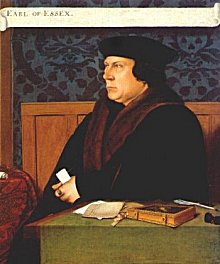

Today's Saturday Play on BBC Radio 4 was an abridged version of A Man for All Seasons, with an a-list cast. If you missed the broadcast like me, for the next 7 days you can "listen again" on the Radio 4 Saturday Play web page. Enjoy!
Here is the BBC synopsis and cast list..
A Man For All Seasons. By Robert Bolt
"Sir Thomas More has managed to resist Henry VIII's pressure on him to sanction the forthcoming wedding to Anne Boleyn. All of Cromwell's plots to entrap Thomas fail as the wily Chancellor counters with his knowledge of the law and his right to silence. But can treachery from an unsuspected source spell doom for the brilliant statesman? "
Sir Thomas More ...... Charles Dance
Master Richard Rich ...... Julian Rhind Tutt
Master Thomas Cromwell ...... Ken Cranham
Cardinal Wolsey ...... Timothy Bateson
King Henry VIII ...... Brian Cox
Duke of Norfolk ...... Nicholas le Prevost
Master Will Roper ...... Martin Freeman
Lady Alice More ...... Kika Markham
Mistress Margaret (Meg) More ...... Romola Garai
Boatman/Steward (aka Matthew)/Jailer ...... Sam Dale
Archbishop Thomas Cranmer/Headsman ...... Peter Tate
Woman ...... Adjoa Andoh
Here is the BBC synopsis and cast list..
A Man For All Seasons. By Robert Bolt
"Sir Thomas More has managed to resist Henry VIII's pressure on him to sanction the forthcoming wedding to Anne Boleyn. All of Cromwell's plots to entrap Thomas fail as the wily Chancellor counters with his knowledge of the law and his right to silence. But can treachery from an unsuspected source spell doom for the brilliant statesman? "
Sir Thomas More ...... Charles Dance
Master Richard Rich ...... Julian Rhind Tutt
Master Thomas Cromwell ...... Ken Cranham
Cardinal Wolsey ...... Timothy Bateson
King Henry VIII ...... Brian Cox
Duke of Norfolk ...... Nicholas le Prevost
Master Will Roper ...... Martin Freeman
Lady Alice More ...... Kika Markham
Mistress Margaret (Meg) More ...... Romola Garai
Boatman/Steward (aka Matthew)/Jailer ...... Sam Dale
Archbishop Thomas Cranmer/Headsman ...... Peter Tate
Woman ...... Adjoa Andoh
portraits: Sir Thomas More (above left), Master Thomas Cromwell (above right).
related previous posts:
04 October, 2006
Cardinal Wolsey Quotes including his Death
If you are searching for quotes by or about Cardinal Wolsey, including his Death, these are perhaps the two best-known quotes from the man himself....
"Father Abbot, I am come to lay my bones amongst you"
George Cavendish, Negotiations of Thomas Wolsey (1641), referring to Wolsey's arrival, already ill, at Leicester Abbey, Nov 26th, 1530, on his way to probable execution at the Tower. He died at Leicester on November 28th or 29th, aged around 55.
"Had I but served God as diligently as I have served the king, he would not have given me over in my gray hairs."
ibid.
Click this link for Cardinal Wolsey quotes in Shakespeare's Henry VIII
19 September, 2006
Tudor perfumery - how to smell nice without taking a bath
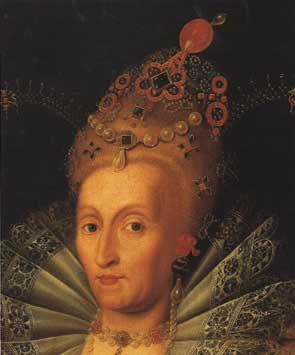
This post is prompted by a surprise link to this blog from the Perfume of Life discussion forum Baths were infrequent in Cardinal Wolsey's time, so how did tudor gentlefolk stay sweet?.
This from Proctor and Gamble's site: "At the royal court in Tudor days 'sweet breath' was prized as much as facial beauty, and perfumes were highly valued in a society where few people paid much attention to washing"
The International Federation of Aromatherapists has a comprehensive piece on the perfumes of Elizabeth I , from which the following extract gives a flavour......
"Houses and Royal Residences used masses of pleasant smelling herbs and flowers as 'strewing herbes' which would be scattered on the floor to produce a pleasant perfume to the air. England produced many aromatic plants in both gardens, fields and hedgerows. In the days when sanitation was virtually unknown, they also assisted in keeping hygienic standards. As every visitor to the the Tower of London will know, the Royal Appartments contained small grilles in the wall for 'bodily functions'.
Every castle or country house had its still room where perfumes and aromatics were made. These were vital places in the country as they produced herbals wines, mead and many other drinks. Housewives prided themselves on producing a whole range of 'household recipes' which included candied flowers, anti-moth powders and herbal bath additives of mint and lovage. Herb gardens proliferated and many can be seen today with their intricate herb knot gardens"
Here is a recipe from the same source:
FAIR GYRDLE OF POMANDERS - THE PERFUME NECKLACE FOR LADIES.
Take 1 ounce of Benjamin ( Benzoin), 1 ounce of Storax and 1 ounce of Labdanum.Heat in a mortar till very hot, and beat all the gums to a perfect paste. In beating add 6 grains of Musk and 4 grains of Civet. When it is beaten to a fine paste, wash your hands with Rose Water and take a portion and roll between the hands till it is round. Make holes in the beads and string them while they are hot.
....certainly beats Blue Stratos.
15 September, 2006
Tudor Googlefight!
A bit of fun for today's post. Googlefight.com enables you to have a little contest between search terms - whoever returns the highest number of google results wins. It is simple but addictive.
Always intersted in the balance of power, Cardinal Wolsey has staged some Googlefights between various Tudor figures, with some interesting results.....
Henry VII starts us off with a respectable 617,000 results, managing to overcome his Yorkist predecessor Richard III on Bosworth field in spite of the latter's superior 2,500,000 Google results.
However (as may be expected) both these are trumped by Henry VIII who wins the overall Tudor Googlefight with an all-conquering 4,690,000 results.
How about the Six Wives? Catherine of Aragon manages 194,000, but the winning combination of beauty and tragedy gets Anne Boleyn 555,000 results. Jane Seymour trumps that on 1,400,000 but of course shares the score with the eponymous actress. Anne of Cleves' appearance seems to have put people off writing about her and she only manages 113,000 hits. Henry's later wives also struggle for attention with Catherine H on 131,000 and Catherine P 125,000.
As for myself, Cardinal Wolsey scores a modest 152,000, but manages to stay ahead of my protegee Thomas Cromwell on 124,000. However we are both well beaten by Sir Thomas More with 395,000 results.
Mustn't forget Edward VI who at least beats his grandad Henry VII with 638,000 results.
Turning to Mary I's time, "Bloody Mary" herself scores an impressive 1,540,000, far ahead of those she did away with: Thomas Cranmer manages 149,000, Lady Jane Grey slightly better on 226,000, and Hugh Latimer a sad 65,000. Clearly martyrdom doesn't guarantee fame on the web.
Mary Queen of Scots gets an impressive 961,000 results, but cannot match her nemesis Elizabeth I on 3,620,000, second only to her father in the rankings.
In Elizabeth's reign it's nearly a dead heat between fellow schemers the Earl of Essex with 224,000 and Robert Dudley on 227,000
Finally, the battle between Elizabethan popular heroes sees Sir Francis Drake on 991,000 trounce Sir Walter Raleigh who has a still impressive 534,000. Clearly beating the Spanish scores higher in the web world than introducing potatoes and tobacco.
29 July, 2006
The Spanish Armada. Today in history,1588
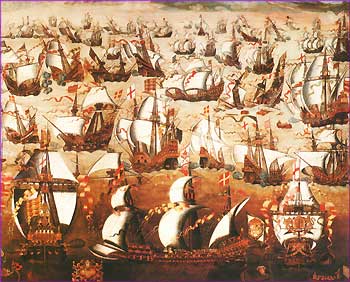
For this weekend's post, here are two pictures of the Spanish Armada engaging the English fleet by an unknown artist of the 16thC English School. One is from Dover's tourism site, and the other from the National Maritime Museum site. Spot the difference? 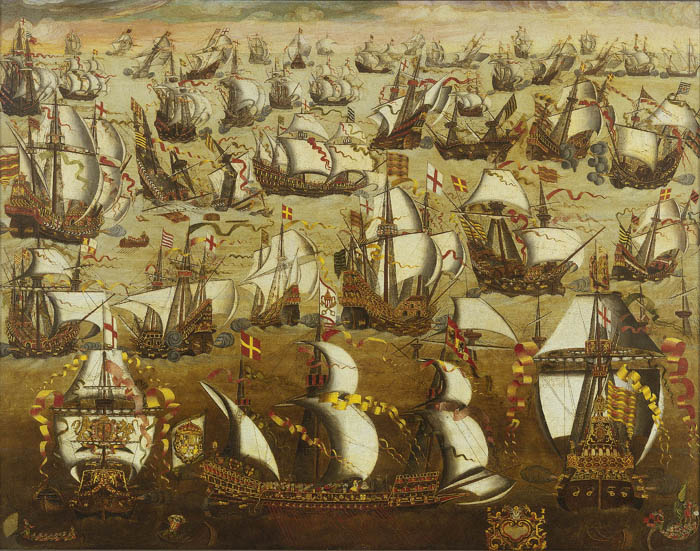
I was recently disappointed to learn that Sir Francis Drake did not indeed insist on finishing his game of bowls while the Armada approached...but it is a plausible story as the English fleet had to wait for suitable weather and tides.
Channel 4's history microsite has more Armada myths and facts.
Finally, a link to the useful Internet Modern History Sourcebook , which has the full text of Elizabeth I's speech to the English forces containing the famous lines "I know I have but the body of a weak and feeble woman; but I have the heart of a king, and of a king of England, too". Hearts of Oak, indeed.
More naval history posts in this blog:
The Battle of Sole Bay, 1672
The Capture of Napoleon by the Bellerophon, 1815
12 July, 2006
This Day in History: Kett's Rebellion (July and August, 1549)

Another popular uprising in England for today's post, this time with a particularly tragic finale.
Robert Kett's Rebellion took place in Norfolk in July and August, 1549, in the reign of the young Edward VI. By the time it was finally crushed over 4,000 lay dead.
It was essentially a protest against the enclosure by "robber barons" of the common land, where landless peasants could graze their animals and gather wood, etc.
Robert Kett (pictured above, seated) led a successful assault on the city of Norwich, which was captured after fierce fighting (twice). John Dudley Earl of Warwick eventually arrived with an army of 8,000-14,000 , but a possible deal involving a pardon for the rebels was scuppered when a boy mooned at Dudley's messenger and is shot dead (whether he uttered the words "kiss my arse!" is unknown) ....see painting above.
Grisly details: 3,000 rebels killed in the subsequent battle on open ground, Kett and several hundred others executed (Kett hung from battlements of Norwich Castle).
The issue of enclosure of common land was to return...
Learnhistory.org has a great Robert Kett site with many useful links if you want to find out more.
More posts on popular uprisings:
The Essex Peasants' Revolt, 1381
Jack Cade's Rebellion, 1451
Subscribe to:
Posts (Atom)


